


History And Evolution Of Magazines
- Jazib Ali

- Sep 5, 2022
- 4 min read
A history of a certain topic can enrich the knowledge of people so today we would look into the history of "Magazines" and how they transformed from time to time.
According to google, a magazine is a regularly published article which focuses on different interest of readers. Looking back in history, after the invention of printing, the publication in Europe put forth the concept of magazine. In late 16th century It was called as "magasin" in French which means " to store" and used in the context of books stored with information. At that time it was something between a book and newspaper that contains material for readers of different interest. These magazines were in form of pamphlets, brochures, almanacs, and broadsides. There was irregular publication of magazine in start which cost writer's time and money but later they adopted regular publication for the readers.
IN 17TH CENTURY

The earliest example of magazines was Erbauliche Monaths Unterredungen , a literary and philosophy magazine, which was launched in 1663 in Germany.
Later another Frenchman, Jean Donneau de Vizé, published his magazine “periodical of amusement,” Le Mercure Galant, in 1672. It was a pleasure reading for people because the magazine was a mix of news, short stories, and poetry. This became popular.
IN 18TH CENTURY
With the growing literacy in women resulted in magazine becoming more established especially in Britain. The three early “essay periodicals” had enormous influence:

Daniel Defoe's "The Review" ; Sir Richard Steele's "The Tatlor" , to which Joseph Addison soon contributed; and Addison and Steele’s "The Spectator". Though they resembled newspapers in the frequency of their appearance, they were more like magazines in content.
America's early magazines were filled with reprints of essays and information that was originally published in British magazines, books, and pamphlets. Very little of the work was attributed due to the lack of copyright laws. As the Revolutionary War approached, magazine content became more persuasive and political, and the words of some of the great statesmen of the time were frequently published. Magazine writers, however, did not work for money or fame; no payments were made and bylines were rarely given. In many cases, the publisher of a magazine also edited materials, wrote content, and ran the press.
Because magazines were larger and heavier than newspapers, postal stagecoaches often would refuse to deliver magazines because they took up precious space. If the postmaster accepted magazines on board, they were charged a much higher rate than that of other mail.
IN 19TH CENTURY
In 19th century, most of the early regular magazines were designed for the few who could afford them and can be fairly called “quality” magazines. In the 1830s, however, less expensive magazines, aimed at a wider public, began to appear. At first these magazines emphasized features that promoted improvement, enlightenment, and family entertainment, but, toward the end of the century, they evolved into popular versions that aimed at providing amusement
The 1830s triggered the arrival of mass circulation magazines in the United States. Publishers began offering less expensive magazines to a wider audience, promoting greater consumption of the print media.
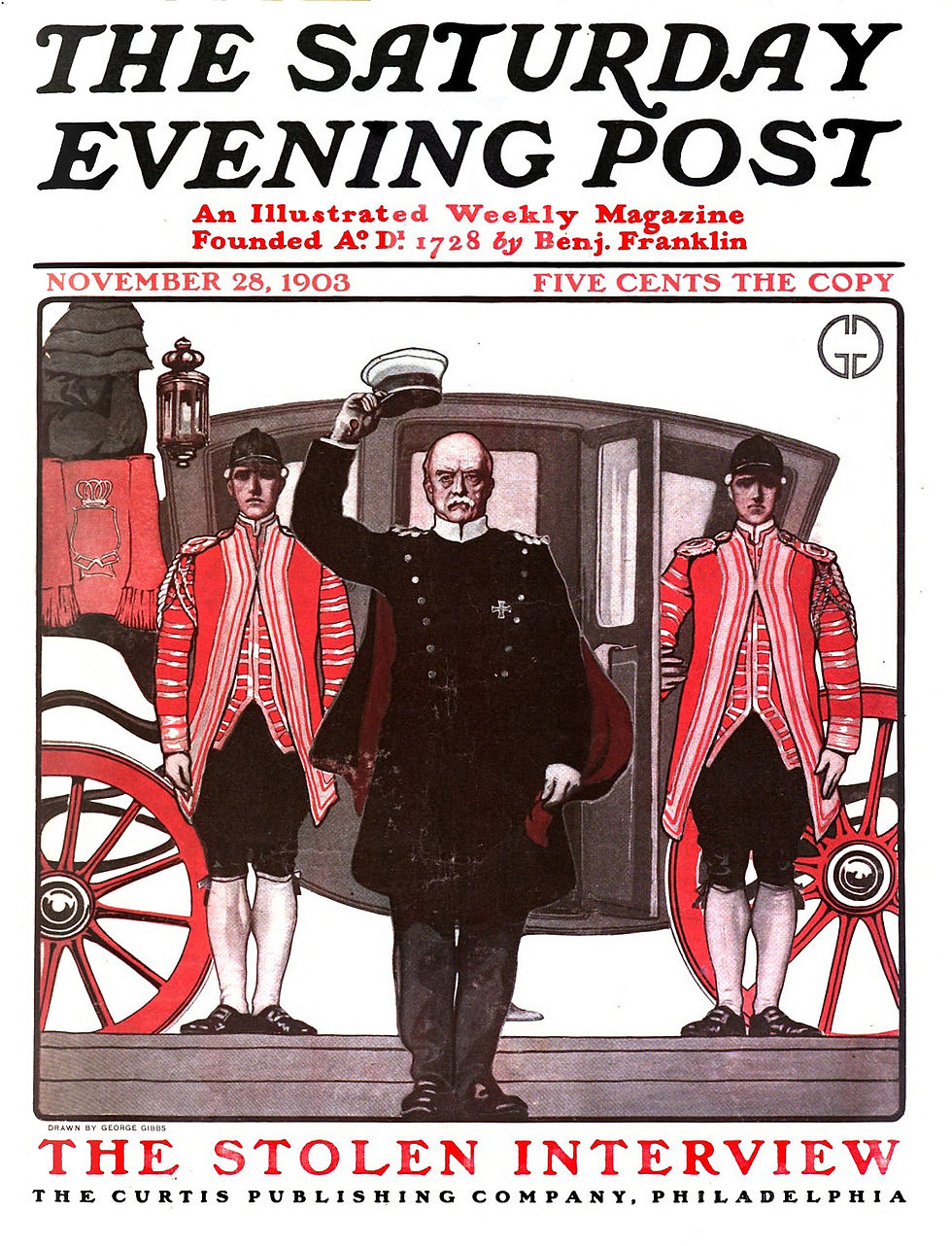
The first truly successful mass circulation magazine in the United States was The Saturday Evening Post. This weekly magazine first began printing in 1821 and remained in regular print production until 1969.
By the end of the century, magazines owners began to discover that advertising revenue could pay for the actual production, thereby making magazines more affordable for the reader. Frank A. Munsey was one of the first to experiment with this new idea. In 1893, he reduced the annual subscription rate of Munsey's Magazine from $3 to $1 and circulation grew from 40,000 to 500,000 by 1895. As a result, the magazine attracted more advertisers who were developing national advertising campaigns based on brand recognition.
IN 20TH CENTURY
Magazine readership flourished in the 1900s. More people were able to read, more people found leisure time in which to read, and more people had discretionary income to spend on magazines. Early in the century, magazines carried over the content focus from the nineteenth century, providing general interest articles and advice; however, this editorial style soon gave way to specialized content that met the needs of specialized audiences. Magazines began to move toward shorter articles, more concise writing, and more service-oriented journalism. Although mass circulation leaders such as Saturday Evening Post and Life remained popular through the early part of the twentieth century, they eventually folded when magazines with uniquely focused editorial concepts began to dominate the industry.

Reader's Digest, created by DeWitt Wallace and his wife Lila Acheson Wallace in 1922, was one of the first notable successes of the twentieth century. The introduction of newsmagazines and picture magazines dramatically changed the U.S. magazine industry during the early 20th century.
IN 21TH CENTURY
During the late 20th and early 21st centuries, the advent of online technology began to greatly affect both the magazine industry and the print media as a whole. Much like newspaper publishers, magazine publishers have had to rethink their structure to reach out to an increasingly online market.
Latest invention in this field are E-magazine or online magazine. Online magazines are digital magazines that are hosted, distributed, and read online.
Today, newsmagazines such as Time and Newsweek continue to dominate the magazine industry. Despite the immense use of personal computers to gain access to information and entertainment via Internet, print magazines have retained popularity in the United States. New technology continue to make production of magazines faster and easier, while the interests of readers will continue to drive editorial content and garner advertising for one of America's favorite mediums.




These are my findings taken from the following websites:


Comments